The exhibition is open to the public free of charge and tickets are not required to visit the exhibition. The gallery does not provide timed entries.
Acquavella Galleries is pleased to present Matisse: The Pursuit of Harmony, an exhibition featuring fifty paintings, works on paper, and sculpture by Henri Matisse on loan from museums, foundations, and private collections. On view from April 9 through May 22, 2026, the exhibition traces Matisse’s investigation of form in two and three dimensions, from paintings and sculptures made at the start of the 20th century through the next five decades of his career. Although Acquavella has dealt in exceptional works by Matisse for over sixty years, this marks the gallery’s first exhibition devoted to the French artist since 1973.
Henri Matisse (1869–1954) is widely regarded as the unparalleled modernist master of color, having revolutionized art with his luminous palette and lyrical color harmonies, but his experimentation with form was equally central to his artistic pursuits. In each chapter of his career, Matisse worked to refine and essentialize his approach to form and the figure. In his own words: “A work of art must be harmonious in its entirety: any superfluous detail would replace some other essential detail in the mind of the spectator.” Simplified, rhythmic forms, often inspired by the graceful, flowing lines of the arabesque, were integral to Matisse’s lifelong pursuit of harmony and balance in his art.
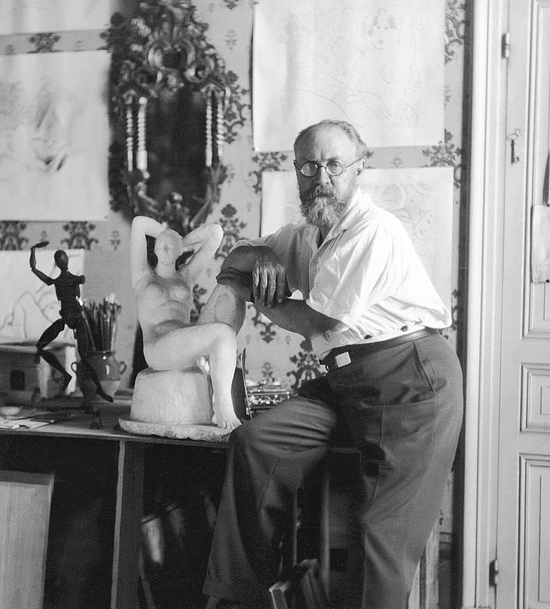
The presentation begins with two early sculptures, The Serf (1900–04) and Madeleine I (1901), and his closely related painting Male Model (1900) and drawing Study for Madeleine (c. 1901). Of the more than eighty sculptures Matisse created, more than half date to the first decade of the 20th century—a radically innovative chapter of the artist’s practice, during which he undertook an extensive series of figure studies alongside his explosive and unprecedented explorations of color. Turning to sculpture to work through problems he encountered in painting, he was able to more thoroughly consider mass, volume, and perspective. This fuller understanding of the figure allowed him to simplify form to its essential rhythms in two and three dimensions. A conversation emerged between the disciplines in Matisse’s work; the same poses appear in his paintings and sculptures, as each medium encouraged formal developments in the other.

![HENRI MATISSE L'Idole [The Idol], 1906](https://static-assets.artlogic.net/w_1010,h_580,c_limit/exhibit-e/559650f9cfaf34ff158b4568/221772cba363ebb4296935080b328535.jpeg)
![HENRI MATISSE Figure décorative [Decorative Figure], 1908](https://static-assets.artlogic.net/w_1010,h_580,c_limit/exhibit-e/559650f9cfaf34ff158b4568/40371b4f99264d2ad51c7b1b01279435.jpeg)
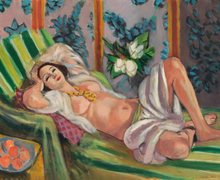
![HENRI MATISSE Odalisque couchée aux magnolias [Odalisque with Magnolias], 1923](https://static-assets.artlogic.net/w_2020,h_1160,c_limit/exhibit-e/559650f9cfaf34ff158b4568/a2dc4f90f3da67af951e6b7eaa50d347.jpeg)
![HENRI MATISSE Grand nu assis [Large Seated Nude], 1922-29, cast 1952](https://static-assets.artlogic.net/w_2020,h_1160,c_limit/exhibit-e/559650f9cfaf34ff158b4568/86fa28b15a07255da58a92db7079e9ce.jpeg)
![HENRI MATISSE Odalisque en manteau rouge [Odalisque in Red Coat], 1937](https://static-assets.artlogic.net/w_2020,h_1160,c_limit/exhibit-e/559650f9cfaf34ff158b4568/6e6a4dec4d29fed81479167cda17698c.jpeg)
![HENRI MATISSE Nu de dos, 4e état [The Back IV], conceived 1930-31, reworked 1942-44, cast 1965](https://static-assets.artlogic.net/w_2020,h_1160,c_limit/exhibit-e/559650f9cfaf34ff158b4568/5ab362fa86e38207f6ade566a23b9ba3.jpeg)
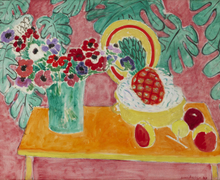
![HENRI MATISSE Anémones et ananas sur fond rose [Pineapples and Anemones], 1940](https://static-assets.artlogic.net/w_2020,h_1160,c_limit/exhibit-e/559650f9cfaf34ff158b4568/69bb916ddf5f7351cd611ce85387dc06.jpeg)
![HENRI MATISSE L'Idole [The Idol], 1906](https://static-assets.artlogic.net/w_260,h_180,c_limit/exhibit-e/559650f9cfaf34ff158b4568/221772cba363ebb4296935080b328535.jpeg)
![HENRI MATISSE Figure décorative [Decorative Figure], 1908](https://static-assets.artlogic.net/w_260,h_180,c_limit/exhibit-e/559650f9cfaf34ff158b4568/40371b4f99264d2ad51c7b1b01279435.jpeg)
![HENRI MATISSE Odalisque couchée aux magnolias [Odalisque with Magnolias], 1923](https://static-assets.artlogic.net/w_260,h_180,c_limit/exhibit-e/559650f9cfaf34ff158b4568/a2dc4f90f3da67af951e6b7eaa50d347.jpeg)
![HENRI MATISSE Grand nu assis [Large Seated Nude], 1922-29, cast 1952](https://static-assets.artlogic.net/w_260,h_180,c_limit/exhibit-e/559650f9cfaf34ff158b4568/86fa28b15a07255da58a92db7079e9ce.jpeg)
![HENRI MATISSE Odalisque en manteau rouge [Odalisque in Red Coat], 1937](https://static-assets.artlogic.net/w_260,h_180,c_limit/exhibit-e/559650f9cfaf34ff158b4568/6e6a4dec4d29fed81479167cda17698c.jpeg)
![HENRI MATISSE Nu de dos, 4e état [The Back IV], conceived 1930-31, reworked 1942-44, cast 1965](https://static-assets.artlogic.net/w_260,h_180,c_limit/exhibit-e/559650f9cfaf34ff158b4568/5ab362fa86e38207f6ade566a23b9ba3.jpeg)
![HENRI MATISSE Anémones et ananas sur fond rose [Pineapples and Anemones], 1940](https://static-assets.artlogic.net/w_260,h_180,c_limit/exhibit-e/559650f9cfaf34ff158b4568/69bb916ddf5f7351cd611ce85387dc06.jpeg)